Friday, March 11, 2016

My Log 506 March 11 2016: A veritable “festival of corporate propaganda” as the mainstream media tries to shore up the failing Clinton campaign for the presidency

At the moment, we are stuck in the middle of what Lee Camp, who  runs an amusing spoof news programme on the Russian TV site RT, calls “a festival of corporate propaganda”  as the mainstream media, electronic and in print, reveals its naked biases in the Democratic primary race between Bernie Sanders and Hillary Clinton.
After the debate before the Michigan primary every one of about six polls that were taken declared that in the general opinion Sanders won hands down. Yet the media kept insisting that Clinton “dominated” the debate. And within 16 hours of the end of the debate the Washington Post (now owned by Jeff Bezos, the Amazon guy) published 16 articles that were critical of, and some of them hostile to Sanders.
My son, who lives in Austin, Texas, had been telling me for months that Bernie was speaking to huge crowds everywhere he went, had been gathering in immense sums of money contributed by small donors, millions of them, and yet all of this, though reported on what is now called social media, had gone unremarked by the mainstream media.
In addition, the mainstream reporters have not shrunk from telling bare-faced lies about the delegate count. They have become accustomed to counting the so-called Superdelegates, that is, the hundreds of Democratic party officials who are given a free ride to the convention, where they are free to support whoever they like, on Hillary’s total. Without them, of course, Bernie is within 200 delegates of Hillary and with only 28 per cent of the total population so far consulted, clearly he is within striking distance of the frontrunner. States with huge populations such as California, Ohio, Illinois and New York have yet to utter, and the fact is Hillary’s victories so far have, with the exception of Massachusetts where she won a narrow victory, all been shored up by the black vote, and there are few states left where the black vote will be decisive in the result.
The Clinton campaign has been unexciting so far: she seems to have been repeating all the mistakes that cost her the nomination to Barack Obama in 2008, when, incidentally, seeing the way things were moving, the Superdelegates deserted her in droves at the convention.
Another impressive element in how this race is being reported, to my way of thinking, is the totally inappropriate and tendentious tendency of mainstream reports to say Sanders’ proposals are naïve, impossible of realization, and beyond the ability of the nation to pay for. One has only to recall that the wage packets of middle-class and working class Americans have remained the same for the last forty years, leaving them struggling to kee their heads above water, while the super rich have risen to obscene levels of wealth, to understand how far from naïve are Bernie’s policies. He wants everyone to be covered by a single-payer health scheme, as in almost  every other major country on earth; he proposes a $15 minimum  wage rate, that would lift hundreds of thousands of service workers out of poverty; he opposes welfare for the rich, for the corporations, and has always done so during his 40-year career as an active politician. And another of his maor planks is to reform the corrupt system for election financing that has enabled the wealthowners to buy control of major politicians. In fact, beside Bernie’s dogged pursuit of an equalized society, Hillary’s proclamations of how progressive she is, how she has always worked to support progressive legislation, how she was the first to warn Wall street they had to mend their ways, and so on, ring more and more hollow the more often one hears them. It is not just a smear, as Hillary says it is, to say that she is the Wall Street candidate.
A good number of black intellectuals have not hesitated to approve Bernie’s candidature, and it is a wonder to a far-off observer than the majority of black voters have not been able to see that all of Bernie’s policies when put into place would immensely benefit them.
The one thing I don’t especially like is how Bernie keeps talking about how he is creating a revolution. By any measure it cannot be called a revolution: rather he is harkening back to the New Deal days of FDR. Although  he has been accused of being vague and unconvincing on foreign policy, I don’t find him particularly so: indeed, he voted against the Iraq war, and has a clean record of opposing most of the aggressive actions taken by the United States in recent years as it has pursued it self-appointed role as the world’s policeman.
It seems almost too much to hope that he could win. But what one can say is that if he doesn’t the United States is destined to keep on doing what it has been doing with such deleterious results everywhere in the world. One thing that everyone knows is that this election is one of unusual importance. And that will be proven should, perchance, Donald Trump win and become President. Bernie’s candidature, equally, suggests the hope, the faint hope perhaps, that a new path could be forged for his great country.
Of course, such hopes exist to be disappointed, as we all know from the experience of Barack Obama, the first black president, in whose watch the conditions of African-Americans have, disappointingly on the whole, deteriorated.


Thursday, March 10, 2016

My Log 505 March 10 2016: Russia ahead of the game in women in senior business positions: a prominent investigator gives the credit to the principles learned under Communism

I came across an interesting suggestion in an article I read this week about the extent to which women are included among the directors of enterprises of various sorts, in countries around the world.
The study was made by a group called Grant Thornton International, a sort of consortium of companies engaged in advocacy towards government (as I understood it. I hope I have got that right).
They conducted more than 5500 interviews in 36 national economies, as to how many women are CEOs, financial, human resources or marketing chiefs in their companies, and the surprise was that Russia came out at the top, far ahead of all other countries.
Even more surprising was the reason given by this supremely capitalist investigators: they attributed this result to the long experience of Communism, with its practice of prioritizing equality principles, its high levels of education for women, and its customary provision of family programmes for women workers.
That this was not a freak result is indicated by the fact that Russia heads the table with 45 per cent of senior roles in business held by women, followed by Lithuania (and the Phillippines, indicating that south-east Asia is also strong in this regard) with 39 per cent, Georgia 38 per cent, Estonia, Poland and Thailand on 37 per cent, Indonesia 36 per cent,  Latvia 35 per cent and Mainland China 30 per cent, with the G7 countries well behind at an average 22 per  cent, with Italy, France and Canada ahead of Germany which has only  15 per cent of women executives.  Since we have been conditioned to think of German and American business to be the most efficient in the world, it is of interest that the global average for women in senior positions is 24 per cent, but 33 per cent of the contacted companies had no  women in senior positions, and thus the report says the UK. U.S. and India alone are foregoing as much as $655 billion in profits.
To read this praise for something done in Communist countries --- customarily completely damned as the world’s most inefficient economies --- is so amazing that I feel I should quote the actual words of the report: “Eastern Europe owes some of its continued women-in-business success to the legacy of Communist principles on equality. The maxim that men and women are equal partners seems to have sparked a trend within the business world that shows little sign of diminishing. When interviewed by the Guardian newspaper about life in
Poland, Maya Mortensen, a woman who grew up under Communist rule in the 1950s and 60s, commented: ‘The regime made absolutely no distinction between men and women. I never even thought about the division – all advance in society was open to men and women equally.’ A social norm seems to have been created in Eastern Europe under communism, where younger women do not question whether or not they could lead in the future and women in leadership are not seen as a rarity or unconventional. In addition, in Eastern Europe it was common for women to receive higher education, including in subjects such as engineering and mathematics, providing a strong basis on which to build a successful career. And there was high-quality childcare attached to most workplaces, overcoming one of the most common barriers to women’s progression in business.”
I have often wondered why, when these countries decided to abandon Communism, they all seemed to throw the baby out with the bathwater, and it is encouraging to find that some of their advances in social behaviour have lived on after them.
One of the things I hold against capitalism is that the system makes demands on those who do its work, but rarely gives them the support required if they are to perform their jobs satisfactorily.  For me, the template example of the heartlessness of capitalism is that they have created a system which requires a household to have two incomes if it to get by, yet it refuses to make the social spending that would help those two workers to perform to their best ability.
The classic example is the refusal in most jurisdictions to provide publicly funded, expert day-care for the children of a couple both of whom are in the work force. I read this week that since Quebec, far ahead in this field in Canada, in 1997 introduced  $5 a day subsidized day-care, the participation of women in the work force has doubled, the province’s GNP has risen dramatically, and poverty has been reduced.
Communism had this covered completely: I remember when we were making a film about a cotton factory with 6,000 workers in China in 1978, even before they could walk, all the babies were delivered to the factory’s child crèche where they were given expert, sympathetic care aided by the mothers who were given periods off to attend to their children during the working day. If they could do that in the poorest country in the world I asked myself why it was not the norm in Canada, one of the richest countries in the world. I think studies made in Quebec have shown the economic benefits gained from the child-care programme in terms of increased production, relief from poverty and the like and it will amaze me if the present provincial government will succeed in cutting the programme to the bare bones, thus jeopardizing these economic and social gains.


Saturday, February 20, 2016

My Log 504 February 20 2016: A Guest Article: My son Ben, now a permanent resident in the United States, tells the truth about the improbable cost and trouble in dealing with health care in our southern neighbour, and it ain’t pretty!

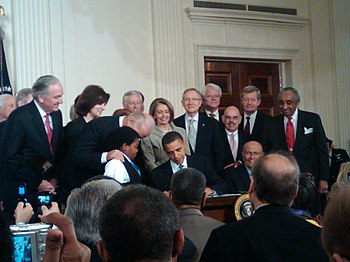
English: Barack Obama signing the Patient Prot...
English: Barack Obama signing the Patient Protection and Affordable Care Act at the White House (Photo credit: Wikipedia)
English: Supporter of a single-payer health ca...
Supporter of a single-payer health care plan demonstrates at an April 4, 2009 "March on Wall Street" in New York City's Financial District (Photo credit: Wikipedia)
A CANADIAN TAKE ON HEALTH CARE
by Ben Richardson
of Austin, Texas

I am getting really sick of people telling us that single payer healthcare is a pipe dream.  It has worked so well for so many countries.  The people who are against it really want to maintain the status quo.  I’m not shitting on Obamacare because it is so much better than what came before it, but it is basically flawed without the single payer option.
After ten years of living in the US as a non resident alien on assorted work visas, I met my wife Natalie we were married in 2014.  Natalie, while generally healthy has a number of health problems that need attention from time to time.  
I got my Permanent Resident status in 2015 in time to sign up for Obamacare.  As I am a self-employed musician/touring soundman and she is in the service industry we average  between $20,000 to $40,000 a year taxable income (depending on how much work I can drum up).  So when we signed up, we picked a Silver Plan from Humana, which seemed like a good deal.  $6900 a year is the cost of the plan, but with the subsidy we only had to pay $1440 a year.  For this we got Primary Care doctor and urgent care visits for a  $35 co-pay, Specialists $50 co-pay.  For anything extra we had to pay 100% till we reached a $1400 deductible and once over that, we had to pay a coinsurance of 20%.  Once we reached $4500 in additional spending the insurance would cover 100% from then on.  Drugs were also cheaper through the plan
It worked fairly well for the first few months until I got an unanticipated job for quite a bit more money.  Once I had corrected my projected income through the Obamacare website our subsidy dropped and our yearly payment rose to a total of $3840.
The coverage was good. Humana had lots of urgent care clinics in their network.  While we never got around to using the policy to its full potential (finding a primary care doctor, having a physical etc..), whenever Natalie had a problem, we would go to the appropriate provider and for $35 she could see a doctor.  A couple of times, I got small bills in the mail for tests and such for around $100-$150 which I paid with no problem.  
This year when I went to renew, I found that the Humana plan I was on had raised its rates by about $150  a month.  So I went on the healthcare.gov website and tried to find a similar Silver Plan.  I found one from Ambetter that was about the same cost as the Humana plan had been in 2015.  It seemed similar, although i had to admit the whole process is quite confusing and not set up well for comparisons between plans.
A few days ago Natalie got sick at work, and the next day I went on the Ambetter website to find a doctor to take her to.  The first couple of clinics that came up were both less than a mile away from our house.  That seemed like a good sign, but it was not to be.  The first of the two clinics turned out to be inside the Del Valle Jail, the second was the children's clinic inside the Delle Valle Primary School.  The next two places I called, only took appointments and didn’t have anything available till next week.  On the third call a woman registered us, then had a consultation over the phone with Natalie.  After spending a good thirty minutes on the phone, she told us that no one was available and to go to the emergency room.  She was extremely insistent that she should go right away.  I asked her if she could recommend any urgent care clinics and she kept insisting that we go to emergency.  I finally searched urgent care on the Ambetter website and was directed to the only one in Austin. It turned out to be inside a CVS drugstore.  When we got there, the nurse said they didn’t have any doctors there and that Natalie should go to emergency.  I finally got a guy from Ambetter on the phone and as it was getting late, he said  he would find us a doctor early the next morning, and he did phone back
The next morning he called back with the primary school and prison phone numbers. At that point I lost my cool and asked him sarcastically if the $6900 the Plan was costing me, really entitled us to a doctor.  I then posted my story on the Ambetter Facebook page, telling them that they sucked.  I soon received a call from an Ambetter lady who, after I took her to task on the lack of walk-in clinics in their network, promised me that she would get me an appointment in the next hour.  She called back and gave me the number of a doctor who could fit us in at 2:30PM.  Talk to Betty, she said.  So I called Betty right away, only to be told in a most unpleasant manner that the doctor had NO openings that day.  By this time, Natalie was starting to feel a little better and we both basically gave up exhausted and frustrated.  
The only silver lining in this whole mess, is that a couple of weeks before the end of the enrollment period, the Health Alliance for Austin Musicians had called me to tell me about a Silver Plan they were pushing that turned out to be a bit cheaper, so they signed me up with The Sendero Silver Plan that is slated to take effect March 1.  They apparently have a lot more urgent care and walk-in clinics so we have our fingers crossed that it will be more like the Humana plan from the first year.
“So why didn’t you just take her to the emergency?” I hear someone ask.  Well I am pretty suspicious of hospital emergency rooms in the US, based on my experience, and also that of Natalie, who always went to emergency rooms before she met me.  I was on travel insurance for the first ten years here, when I went to the hospital one night with a sore abdomen.  Four hours later I walked out with a diagnosis of a strained abdomen.  They presented me with a bill for moe than $12,000, and tried to get me to pay for it and get reimbursed by the insurance company, even though the insurance rep had told me that that hospital could direct bill them. I didn’t pay them, and when I later followed up with the insurance company to make sure that the bill had been paid, they told me that they had asked the hospital for a detailed accounting of all charges.  The hospital had responded by sending a bill for $900 which the insurance paid and that was the end of it.  Can you believe they tried to rip me off for $11,100?
One time, on the road, Natalie had terrible stomach pains and I took her to the hospital for a three-hour visit.  I later received a bill for over $4,000.  
On another occasion she was rear-ended by another driver and had to go to the hospital that night, returning the next day feeling worse, requiring a second visit.  I had decent car insurance, the other driver had none. My Insurance company covered the repairs to the car, and assured me that they had taken care of all the medical bills to the tune of almost $3000 (the maximum they were legally obligated to pay).  Imagine my shock six months later to get a bill from a collection agency for more than $14,000 for the second hospital visit.  I think this is because the doctors just cavalierly order the tests and not once in my experience have they ever mentioned that these tests are costing you thousands of dollars.  Even when I would question the need for so many tests, the nurses would just cheerily brush off your concerns by saying “the doctor has ordered them”.
After we had signed up for coverage, and Natalie feared during a Caribbean holiday she had caught some kind of infection from a biting insect. We were driving from Dallas Airport back to Austin late in the evening and she called a hospital in Waco and asked them if they took our Humana Insurance, which they assured us they did.  We were there for two hours but after an examination they gave her a clean bill of health.  I specifically asked them if there were any charges as we left, and they said no the insurance has got it.  A month later I received two bills, one from the hospital and one from the doctor totalling more than $900.  The Humana contribution was $96.  But nobody tells you any of that. They usually tell you as little as possible till they’ve done every possible test they can think of, and then present you with a massive bill.   To add insult to injury, in not one of these cases I’ve talked about did we turn out to have anything  seriously wrong with us, certainly nothing that should cost $12,000, or $14,000, or $4,000, or even $900.  This is highway robbery by the whole medical insurance industry.  
So this is Obamacare.  Much much better than the previous system where the insurance companies could deny coverage at anytime and if you had a pre-existing condition you either didn’t get insurance or had to pay a small fortune for it.  The only reason that I became a permanent resident was because it looked like Obamacare would cover us for not too much money.  But the whole system is so skewed towards making a profit that it really is obscene to a Canadian like me.  
The whole day I was looking for a doctor for Natalie, none of the people I talked to gave me the impression they were  really concerned about her welfare.  All they cared about was whether they took our insurance.
I lived in Canada from the age of seven, till I left for Austin at the age of 43.  I confess for that whole period I never gave a single thought to healthcare because it was just there. Though each province has a slightly different way of doing things, the bottom line is that all essential healthcare is covered.  
You just give the doctor or hospital your health card and almost all the charges are covered by the government.  No co-pays and no deductibles and almost no paperwork.
When I was 20 I grew a cyst the size of a tennis ball on my forehead, and had to spend a week in the hospital as they drained it to make sure the infection didn’t spread to my brain.  The cost to me… $0.  When I was 24, my lung collapsed.  That was another week in the hospital.  Then it collapsed again.  One more week in hospital.  Then I had to go in for chest surgery to fix it.  That was a MONTH in the hospital.  Again… the cost to me.. $0.
Five years ago, my Dad almost lost his left eye.  Only a specialist in optic surgery was able to save it.  Cost to him… $0. In 2007 my mother died after two years of daily at home nursing and doctor visits plus two longish spells in the hospital.  Her care was uniformly excellent.  Again cost to my Dad… $0.
“Oh but you’re paying way more in taxes,” I hear someone saying.  Well as someone who has paid taxes in both the US and Canada, I think I can say with authority, that I wasn’t paying any more in income taxes in Canada than I have in the US.  Alcohol, cigarettes and gas are definitely more expensive, and the cost of living can be higher, but that is really because Canada and most other first world countries have higher standards of living, and access to excellent healthcare.  And I have spent roughly the same amount of time waiting in emergency rooms in both the US and Canada.  
The US spends twice (that is double) what most other countries pay for healthcare per capita, and I can see why.  So much time, energy and money is spent trying to eke a profit out of the consumer that its no wonder Americans are so unhealthy.
There’s certain dignity that comes with being confident that when you get sick, you will be taken care of.  That dignity is sorely lacking here in the US and that is why the citizens need to elect Bernie Sanders to put the idea of single payer healthcare squarely on the table.
It will save us a ton of money and lower costs in the process.  The other aspect that no one seems to be talking about is that it will be amazing for business.  I saw somewhere that the average cost to the employer for healthcare is now in the neighborhood of $12,000 per employee.  So even if the taxes were $3,000 per person for the government to pay all the costs, businesses would still be saving a ton.  Hell, if I had to pay $3,000 in extra taxes I would still come out ahead of Obamacare.
I can’t vote, but you know Natalie will be voting for Bernie Sanders…  Feel the Bern!!!!!


Thursday, February 18, 2016

My Log 503 Feb 18 2016: NDP a party that would run a mile rather than admit it is “Socialist”: time for a re-evaluation, with a new team in charge

Federal CCF Caucus, in 1942 with new leader M....
Federal CCF Caucus, in 1942 with new leader M.J. Coldwell(Photo credit: Wikipedia)
Clement Attlee, British Prime Minister 1945-51
Clement Attlee, British Prime Minister 1945-51 (Photo credit: Wikipedia)
Plaque recording the location of the formation...
Plaque recording the location of the formation of the British Labour Party in 1900. (Photo credit: Wikipedia)
English: This is a derivative of the National ...
M.J.Coldwell (Photo credit: Wikipedia)
English: Thomas Mulcair, NDP Member of Parliam...
Thomas Mulcair, present leader of NDP(Photo credit: Wikipedia)
Official Portrait of President Ronald Reagan
President Ronald Reagan, who began the downslide of the common man (Photo credit: Wikipedia)
U.S. Senator Bernie Sanders of Vermont
U.S. Senator Bernie Sanders of Vermont, who is putting the cat among the pigeons in the present US primary elections (Photo credit: Wikipedia)
English: Tommy Douglas, former Premier of Sask...
Tommy Douglas, leader of the NDP, of whom CBC viewers said he was the greatest Canadian who ever lived (Photo credit: Wikipedia)
When I arrived in Canada in 1954, having been raised under a Labour government in social democratic New Zealand, and having, on joining the workforce, automatically become a union member, I suppose I could have been described as a raving socialist, and a red-hot union member.
Naturally, joining the work force in Canada was a bit of a shock, especially since my first job was with the notoriously anti-union Thomson Newspapers, where I first came across the automated linotype machine to which a role of copy cold be affixed and printed out mechanically, especially to obviate the need to hire a linotype operator who might be unionized. In those days as a reporter, I would never have thought of taking a picture, because that was judged, in the union contracts I had always followed, to be the work of a photographer, and I would never have thought of stealing his job.
Of course from the beginning I supported politically the CCF, later the New Democratic Party, and later, when I was working in Western Canada, I even got to interview both M.J. Coldwell  and Tommy Douglas, CCF leaders, and my impression of both was that they would have died rather than allow the word
“socialism” past their lips.  Both, of course, were quite admirable. I was accustomed to such leaders who, while dreaming of a revolution, nevertheless trimmed what they fought for to the winds of popular acceptance. I was more or less driven out of New Zealand in 1950 by my disgust at the apostasy of Prime Minister Peter Fraser, a self-educated working class leader, who entered Parliament when in jail in the First World War for opposing conscription, and who, in 1949, returned from an Imperial Defence Conference in England where he was persuaded that New Zealand needed conscription to confront the so-called Soviet menace. Thus he split the Labour party and ensured its defeat after 14 years of good government. But not only that: he became the all-time symbol, for me, of the well-known affliction for radical leaders of the “embrace of the duchesses.” I arrived in England in 1951 just in time to join the Labour Party and lick stamps for them during the election, and then to quit in dismay after hearing my new leader Clement Attlee speak, an establishmentarian if ever I heard one.
So, on arrival in Canada, I never had wild expectations of any party, but I did realize that the NDP had performed a useful service to the country in differentiating it from the elephant in the south, through having espoused and seen through into legislation such measures as unemployment insurance, family allowances and universal old age pensions. Of course, such policies were stolen by the Liberals, which sidelined the CCF and later the NDP. The party had, to me, an unfortunate habit of being led by Protestant ministers, but of these Tommy Douglas at least appeared to be a man of conviction, ready to stand alone in face of reactionary legislation as he did in opposing Trudeau’s War Measures Act imposition in 1970.
I spent the 1960s in England, but on my return witnessed the election of a number of more or less lack-lustre NDP leaders --- I recall my astonishment when watching the entirely admirable labour leader Bob White dance a gig in celebration of Audrey McLaughlin’s election as leader --- and it is no surprise that none of these leaders has ever taken the party anywhere.
These reflections have been stimulated by an excellent article by Michal Rozworski  and Derrick O'Keefe published in Ricochet.media, reflecting on whether the success of Bernie Sanders in the US might presage the end for Tom Mulcair in Canada. They contrast Sanders’s wholehearted approach to change with the drift to the right engineered by the former Liberal Mulcair during the recent election, and by the fact that to all intents and purposes, Justin Trudeau’s Liberals went to the electorate with a more radical programme than that offered by the NDP.
Nor is anything likely to change so long as Mulcair remains the leader. He is, at heart, a Liberal, and a wholehearted believer in the status quo, as we can see now that the mist has cleared away from he election campaign.  He has been, it is true, an effective Parliamentary debater, and in that role played his part in exposing the former Prime Minister Harper in such a way as to hasten his downfall. But that the Liberals should have been willing to tax the rich, while the NDP was not, surely tells us enough about the direction in which Mulcair is leading the party.
That Sanders has, as the Ricochet authors write, managed to put “socialism” back on the political agenda of the United States, where it had been for decades almost equivalent to poison, suggests to them that Canadians of the Left must take heed, if they are to have any chance of playing a role in the future.
Another interesting article on Sanders and the Left has appeared in The Guardian by Thomas Piketty, who claims that the rise of Sanders signals the end of the era ushered in by Ronald Reagan. Until Reagan, writes Piketty, that is to say, in the years from the 1930s to the 1970s, the US were at the forefront of an ambitious set of policies aiming to reduce social inequalities.”  He recalls thatthe tax rate for the people of highest income ($1 million or more) was for half a century an average of 82 per cent, with peaks of 91 per cent from the 1940s to the 1960s, and were still as high as 70 per cent when Reagan was elected. This was accompanied by very high rates on estates, up to 80 per cent (twice as much as in France or Germany), and these were measures which greatly reduced the concentration of capital in the United States, and did not adversely affect its economy.
In the context of the Canadian Left, which has been shuffling to reduce its recognition of “socialism”, it is extremely important to be reminded of these facts. If the United States could do it in those days, then surely Canada could do it in these days. And by “it” I mean introduce a coherent set of policies to reduce inequalities and redistribute money from the wealth-owners to the people who do the actual work, the middle and working classes, primarily through social measures such as transfers, child care, early education, free University tuitions (which, someone has reminded us this week would amount to no more than $10 billion a year, no more than four per cent of the federal budget).
It is ludicrous for the right to argue that we cannot afford measures which we could afford in 1970, even though today we have far more wealth to distribute. This is, or should be, the essential difference between Left and Right in politics. For the Right, with their untrammelled market system, it is every man for himself, and the devil take the hindmost. For the Left, all politics should be underborn by a recognition that we are our brothers’ keepers.

Although the NDP has a good record of having stimulated progressive measures implemented by other parties, they are showing no evidence at the moment that they are thinking about what is going to be needed in our new age of technology and accumulation of wealth, if life is to remain liveable for every one of us.