Thursday, November 24, 2011

My Log 280: Tom Kent, my old boss, bites the dust at age 89: a man of remarkable abilities

In writing about Tom Kent, who died on Nov 15, the man who offered me my first serious job in Canadian journalism back in1955 when he was editor of the Winnipeg Free Press, I cannot pretend to any great degree of objectivity. The reason for that is I have never really liked any boss I ever worked for, and I cannot pretend that I particularly liked him, either.

Nevertheless, I do have to pay tribute to him for his somewhat remarkable abilities. He could write a coherent and often persuasive editorial article quicker than anyone I have ever known. Later, after he left journalism, he became a senior adviser to the Liberal governments of Canada, first headed by Lester Pearson, later by Pierre Elliot Trudeau, and in that capacity he is credited with having been the major influence in creation of Medicare as a federal program, and such social programs as the Canadian Pension Plan. In this work he was obviously drawing on his background as, I believe, a working class boy growing up in England, no doubt influenced in his youth by the British Labour Party,

Some obituarists in the last few days have paid him glowing tributes, claiming him to have been passionate, fearless and principled. I wouldn’t know anything about that. I have to judge him as the boss who presided over my real entry into Canadian journalism from 1955 to 1957. (I say “real,” because before that I put in three months as a wage slave for the Thomson organization on a newspaper, if it may be called that, called The Northern Daily News in Kirkland Lake, Ontario.)

The Winnipeg Free Press was a somewhat eccentric outfit when I worked there in the 1950s. I often say it was regarded as a great newspaper by more people who have never read it than any newspaper on earth. In my view it did not merit such accolades. But I enjoyed working there, and my enjoyment probably had something to do with the fact that I had few contacts with Tom Kent while there. The city editor, Albert Boothe, was a prince among men --- really the only boss I ever worked for whom I unreservedly esteemed.

One of my best Winnipeg Free Press stories concerned a man called Diplock, one of those old-time journalists who was living out his final days on the job by sitting at a corner typewriter in the vast newsroom, undertaking the occasional job of rewriting some item from the opposition Winnipeg Tribune that somehow or other the Free Press had failed to cover. One day Diplock disappeared, simply failed to turn up, without a word of explanation to anyone. Eventually it became known he was in Britain, where he apparently remained for two years. Eventually, however, he turned up one day, sat at the same typewriter as before, and waited for someone to notice him. Albert Boothe noticed him, picked up a Tribune item that needed a quick rewrite, walked over to him, placed the item before him, and said, as if he had never disappeared, “Could you give us a few words on that, please?”

The farming magazine run by the Free Press had its typewriters along the back of the newsroom. Every day, a strange little woman known as Jeannie came into the newsroom, took up her place along the back row of typewriters, unwrapped her several layers of clothing, then sat down and typed away for half an hour or an hour before wrapping up again and going off into the Winnipeg streets. Who was she? Was she a staff member? Not at all: she was just a person who was working on some manuscript of her own, and whose use of the newspaper's typewriter had come to be accepted as part of the day’s proceedings.

Tom Kent was editor over the last days of a moribund Liberal provincial government (unless my memory betrays me), and his cogent editorials must have played a considerable part in its overthrow by the Conservative government of Duff Roblin.

My relationship with Kent grew somewhat tenuous after he emerged into the news room one day, found me free of work, told me that James Coyne, governor of the Bank of Canada, was about to get married, and asked me to phone him to confirm it. I phoned, and Coyne hung up in my ear. So --- I was still fairly fresh out of my upbringing in the determinedly egalitarian society of New Zealand --- I phoned Coyne back and told him I objected to his unnecessary rudeness. This, within minutes brought Kent storming out of his office to denounce me in public before the whole staff, a confrontation in which I seem to remember I gave almost as good as I got. But my reaction to the incident was, if this guy can’t even defend his own staff, what the hell use is he as a human being?

I left the Free Press the following summer, and moved to Montreal. I met Kent only once thereafter. I was reporting in London, England on a press conference he gave about immigration to Canada (he was working in that field for the federal government by that time.) I remember we were washing our hands in the washroom side by side, when he looked up and congratulated me on an article I had just written about Harold Wilson. He said I had him off perfectly, which (all modesty aside) was a pretty fair judgment.

Later I often thought it might be nice to approach him in his last years. But I never did it. I had approached him for work when he was appointed head of a Royal Commission on ownership in the Canadian press, but all I received back was a cold letter from a secretary telling me my letter was on file.

Years later, Kent wrote some articles in the Oitawa Citizen or Globe and Mail (I can’t remember which) suggesting changes to Canada’s attitude towards immigrants and citizenship. These followed the kerfuffle that arose when Canadian citizens who were living in Lebanon lined up expecting Canada to get them out of Lebanon during an Israeli invasion.

I thought Kent’s ideas for limiting the use naturalized Canadians could make of their status were tantamount of creating two or more classes of Canadian citizenship. I thought these ideas were berserk, and concluded his powers must be failing in his old age.

Nevertheless, I am ready to pay tribute to his favorable impact on his adopted country. If only everyone were to work as effectively for the general good, we would be a hell of a lot better nation.

Sunday, November 20, 2011

My Log 279 Nov 20 2011 Arundhati Roy, like everyone else, prevented from mentioning Israel’s nuclear weapons on TV

United States Trident II (D-5) missile underwa...Trident missile being launched from underwater. Image via Wikipedia

When I was looking up the quote by Arundhati Roy with which I ended my last post, made at an Occupy Wall Street meeting recently, I came across another thing she said in a recent speech that got me thinking about the state of freedom of the press, one of America’s supposedly cherished values.

Roy’s story was that when appearing on the Charlie Rose show on PBS on one occasion, he asked her if she believed India should have nuclear weapons. She replied, “No I don’t believe India should have nuclear weapons. I also don’t believe the United States should have nuclear weapons, and I don’t believe Israel should have nuclear weapons.”

Rose apparently cut her off quickly, saying, “That was not my question. My question was do you believe India should have nuclear weapons.”

She gave an identical reply: she said this went on for five minutes or so, “and in the end, they didn’t broadcast the programme.”

There can only be one reason for that: she mentioned the unmentionable subject in Western political discourse, which is that Israel has nuclear weapons. That a commentator like Rose should have made strenuous efforts to ensure that unmentionable subject was not mentioned, even to the point of censoring the item right out of his program, makes one wonder if in fact there is some widely understood ukase, handed down from on high, that has been adopted by all “responsible” American commentators, to the effect that Israel’s nuclear weapons should never be mentioned publicly. If that is true, it is shocking. And the evidence seems to suggest it is true. How many times, while some American representative is muttering away about how dangerous Iran is, and how destabilizing it would be for them to get nuclear weapons, how many times have I longed for some questioner to ask, “How about Israel’s nuclear weapons? Why do you never mention them? Is it not conceivable that an Iranian nuclear weapon might correct a dramatic power imbalance in the region?”

No one ever raises this question. I have never heard it raised in an interview with a Western powers spokesperson, although any journalist worth his salt should raise it as his or her first question, in my opinion.

As we all know, the unquestioned existence of Israel’s nuclear weapons is the hypocritical bomb lying at the heart of all Western policy in the region. They never objected when Israel got these weapons. They never objected when India and Pakistan got these weapons. Now they are threatening an outbreak of World War III if Iran should get them.

Talk about double standards!

Enhanced by Zemanta

Saturday, November 19, 2011

My Log 278 Nov 19 2011 I move house: the hypocrites are spooked by the demos; capitalism reveals its essential cruelty and indifference to people

U.S. Senator Bernie Sanders of VermontBernie Sanders Image via Wikipedia

I have just spent the better part of two weeks moving house. Although I was told what a desirable tenant I would be, being older, and therefore more stable than the younger people, I was suddenly confronted one day with the news that the owner of the building in which I had my apartment, having previously lived in British Columbia, had decided to relocate to Ottawa, wanted to live in my apartment, and here, thank you very much, is your two months’ notice.

This came just after the students had arrived and filled up most of the places. However, being ever resourceful in such things, I started looking for a place on a Friday, and by Monday had decided to move to a two-bedroomed apartment in a high-rise building, just to make sure the same thing could not happen to me again.

So, for the first time, I find myself living on the fifth floor of a building with many dozens of tenants, with a swimming pool and a gym and an immense laundry room, on the 21st floor, and with all manner of things you can and cannot do, in the general interests of the tenantry at large.

So far I like it. The hot water system is amazing: instanter, immediately one turns the tap; and the toilet whooshes away like a rocket machine.

And now, having put my remaining pictures (I sold most of them a year or so ago) back up on the walls, I have time to look around the world and see how things are going.

Some amazing things have taken place while I was preoccupied with establishing myself in a place that is right downtown in Ottawa.

Many things have puzzled me. For example, the panic that ensued when the Greek Prime Minister announced he would have a referendum on the proposed bailout for his country’s economic crisis. Has it not been an article of faith that the Western, capitalistic model of society is based on democratic decision of the citizens, and that this is what distinguishes it from draconian systems like dictatorships, communist or fascist, oligarchies, and the like? So how can these same propagandists for democracy raise such a hue and cry over a democratic vote on a proposal put forward by a bunch of economic technocrats? The very idea was not only frowned upon, but was met with panicked dismay, was said to be likely to scuttle any possibility of what these people call progress. In fact, the thing was so unthinkable that the Greek Prime Minister with this dangerous idea had to be removed from power, and this is exactly what has happened.

He has been replaced by a banker, or a collection of bankers. And the same thing has happened in Italy, where a group of banking technocrats have begun to impose the bankers’ favorite solution to all problems, which is to impose austerity on the living standards of the ordinary citizens.

That is one thing that has happened that has bewildered me somewhat. Another amazing revelation that literally set me back on my heels was that Bernie Sanders, the only socialist in the American political system, has managed to force out of the Federal Reserve in the United States information that that body was desperately anxious to hide: namely, that during the bailouts by which they prevented the whole capitalistic system from collapsing, the Federal Reserve put up --- wait for this, you’re scarcely going to believe this figure! --- $16 trillion dollars, paid out to bankers, individuals and government agencies in the United States and in some other countries. I am going to try to write that in figures.

$16,000,000,000,000. Would that be right?

It is an unimaginable figure, an amount of money that, I am quite sure, doesn’t really exist, except in the books of banks and government institutions. No one has ever had that much money, ever. But the enormity of what happened is even greater than I had imagined.

Let’s see: banks and insurance companies, and other similar agencies that have, all my life, ranked number one among by unfavorite demonic institutions, were granted sums in gazillions of dollars, for the most part without any conditions, to rescue them from their own horrendous mistakes that were caused by their own massive greed and lack of the qualities of citizenship. Meanwhile, the many hundreds of thousands of people who had been forced from their homes by these same institutions have been left to swelter, or freeze, depending on their location, without any aid of any kind. Many other consequences have been borne by the ordinary people: for example, education has been priced beyond the reach of everyone except the well-heeled, and food costs have spiraled upwards, as has the cost of living in general. Students leave university now crippled with a load of debt so huge that they probably are never going to be able to pay it off. And it has become common to hear people moan about how can a young couple ever aspire to owning a house?

It is too discouraging to go into all the many ways that ordinary people are stewing as a result of these machinations by the financial lords of creation.

The Occupy Wall Street movement has been an impressive response to all this: that it should have spread to more than 900 cities around the world is an indication of how close people must be to saying: we have had enough. We need a huge change in this self-sustaining, criminal, greedy, appallingly amoral system of capitalist goverance. The only problem is that unlike the situation in Egypt, the movement has been unable to mobilize the milllions into street demonstrations in their support. That is the missing ingredient that would lead to the overthrow of the whole rotten system.

I can conclude this by quoting (not for the first time, as readers of this blog over the years will know) the Indian novelist and polemicist Arundhati Roy,who recently made a speech in New York to the Wall street occupiers. In response to the bleatings of the establishment media to the effect that the Occupy movement has no comprehensible objectives, she produced four objectives, which I support:

“They (the 1%) say that we don't have demands… perhaps they don't know that our anger alone would be enough to destroy them. But here are some things – a few 'pre-revolutionary' thoughts I had – for us to think about together:

“We want to put a lid on this system that manufactures inequality. We want to put a cap on the unfettered accumulation of wealth and property by individuals as well as corporations. As 'cap-ist'" and 'lid-ites', we demand:

• An end to cross-ownership in businesses. For example, weapons manufacturers cannot own TV stations; mining corporations cannot run newspapers; business houses cannot fund universities; drug companies cannot control public health funds.

• Two, natural resources and essential infrastructure – water supply, electricity, health, and education – cannot be privatized.

• Three, everybody must have the right to shelter, education and healthcare.

• Four, the children of the rich cannot inherit their parents' wealth.

“This struggle has re-awakened our imagination. Somewhere along the way, capitalism reduced the idea of justice to mean just 'human rights', and the idea of dreaming of equality became blasphemous. We are not fighting to just tinker with reforming a system that needs to be replaced.”

And so say all of us!

Enhanced by Zemanta

Saturday, November 12, 2011

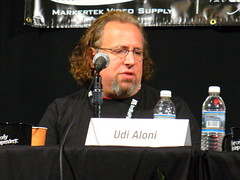
Udi AloniUdi aloni Image by aavarnum via FlickrLink of the Day (2), Nov 12, 2011: An Israeli writer, Udi Aloni, brought up in the heart of Zionism, tells in salon.com the agonizing story of how Israel has gradually turned into an apartheid state, denying rights to Palestinians. “My father was implementing agrarian apartheid policies, and long before the occupation of 1967…” “…A couple of years ago I approached my ardently Zionist mom, a woman who carried a weapon for the Jewish community of Jerusalem in 1948, and asked her a simple question: ‘Mom, is all this apartheid?’ With the sigh of a betrayed lover she indicated that, yes, this is apartheid. My heart broke….”
Enhanced by Zemanta
US journalist and commentator Bill MoyersBill Moyers Image via Wikipedia

Link of the Day (1): Nov 12 2011: Bill Moyers, in a remarkable article in
The Nation magazine, How Wall Street Occupied America,
details the steps taken by the wealth-owners to take over the government and the running of the United States. It has all happened since 1971, and it has been a deliberate strategy run by major corporations, with heartbreaking results for the quality if American life.

Enhanced by Zemanta

Tuesday, November 8, 2011

Cropped picture of Joseph Stiglitz, U.S. econo...Joseph Stiglitz Image via WikipediaLink of the Day: Nov 8 2011: The last words of my book, Memoirs of a Media Maverick, published some years ago, were that I agree with Arundhati Roy the wonderful Indian writer, that the only globalization we can embrace is the globalization of dissent. I am therefore delighted to find Joseph E. Stiglitz, noted Nobel laureate and professor at Columbia University, coming to the same conclusion this week, in an article in Project Syndicate, A World of Ideas, in which he explains why the Occupy Wall Street movement protesters are pursuing aims that are essential for the survival of the human race.

Read this notable article, The Globalization of Dissent, here.
Enhanced by Zemanta

Friday, October 28, 2011

Cairo UniversityCairo University Image via Wikipedia Link of the Day: October 28 2011: A remarkably eloquent message has been sent from some activists in Cairo, of advice and encouragement to those in North America and elsewhere who are occupying the seats of financial power. It sets the whole movement, on both sides of the world, in a global context that makes a lot of sense. Dissent, and struggle, is all….
Enhanced by Zemanta

Monday, October 17, 2011

Canadian parliament from the Musée Canadienne ...Image via Wikipedia

Link of the Day, October 17 2011: ‘The slogan of Occupy Wall Street is “We are the 99%.” So, who are the 1 per cent in Canada? A 2010 report by the Canadian Centre for Policy Alternatives (CCPA) by Armine Yalnizyan documents “The Rise of Canada's Richest 1%.” There are 246,000 of them and their average income is $403,000. They hold 13.8 per cent of incomes, and pay some of the lowest taxes that the top 1 per cent have ever paid, historically.'

Read the facts here about our 1 percenters, in the article by Justin Podur in Socialist Project • E-Bulletin No. 556 October 16, The Logic of Occupy Wall Street for Canada. This establishes that inequalities in Canada have grown faster even than in the US, under recent Conservative governments.


Enhanced by Zemanta

Sunday, October 9, 2011

LONDON, ENGLAND - OCTOBER 08:  Journalist John...John Pilger (left) with Julian Assange...Image by Getty Images via @daylife

Link of the Day:October 9 2011: John Pilger brings us up-to-date on the international effort to smear Julian Assange and the revolution he brought to the media with his leaks of US classified documents. Read his article from The New Statesman of London.

Enhanced by Zemanta

Thursday, October 6, 2011

My Log 277: “It’ll be the last time,” mutters Chris Hedges in face of Kevin O”Leary’s insults

Chris Hedges
Chris Hedges: Image via Wikipedia
I came across a fascinating example this week of how the CBC’s love affaire with right-wing populists can deprive us of the diversity of opinion that the CBC was established to encourage.
I am not a watcher of the Lang and O’Leary exchange, but I happened on it while flicking the dial tonight, and came across the last few minutes of an interview they were doing with the redoubtable US social commentator Chris Hedges. He was explaining to O’Leary and Diana Buckner the objectives of the many thousands of people who have joined the Occupy Wall street movement. What he was saying would not come as any surprise to anyone whose eyes and ears are open to what is really happening in the recent economic meltdown, which has exposed so cruelly the corruption, greed and dysfunctionality of capitalism, but it all seemed to come as a new idea to O’Leary, who became so agitated as Hedges began with his impressive dismissal of the corporate mind-set that he interrupted testily by saying, “You sound like some leftist nut-bar.”
At this point, justifiably, Hedges said that normally he did not accept invitations to speak on television programmes that could be expected to engage in personal abuse. He was interested in discussing the issues. And he went on to say that corporations don’t produce anything….
“Oh, really?” said O’Leary, his voice dripping with sarcasm.
“Of course not, said Hedges. He was, he said, talking about the financial gamblers who appear to have taken over the economy, and continued with his root-and-branch denunciation.
“So you want to do away with all corporations?” blurted O’Leary. “Where are you going to get a job? What would you do with Goldman Sachs, for example?”
Hedges told him in words of one-syllable. They should be prosecuted, because their sale of mortgages to people whom they knew could never repay them, which they then gathered into funds whose failure they then bet on, was fraudulent.
Buckner thanked him for giving his views, and Hedges muttered, as he took his hearing instrument out of his ear, “It will be the last time.”
Now I am sure I am not alone in believing that Canadians would be much better served by hearing regularly from Chris Hedges, who has an eloquent and challenging criticism of American society, than they are by the ubiquity on CBC screens of Kevin O’Leary, with whose brash arrogance the CBC seems to have fallen in love since they discovered him in the Dragon’s Den program.
I can only speak personally, but I find everything about O’Leary, his persona, his opinions, his overbearing manner, to be extremely off-putting, especially his constangt reiteration that only money matters, that nothing else in life is important, an opinion so idiotic that it amazes me that the CBC can’t get enough of him.
If there is anybody with some sense among the CBC brass, he or she will recognize this exchange between O’Leary and Hedges as a warning sign that it is time for the corporation to rediscover the impartiality that once allowed them to broadcast the widest possible range of opinion, unfortunately now denied to us.
Enhanced by Zemanta

Thursday, September 29, 2011

My Log 276:Documentary on “Experimental Eskimos” throws a sorry light on the arrogance, ignorance of Canada’s northern administration --

Igloo innerImage via WikipediaI hardly know where to begin to write about the documentary film screened tonight by CBC --- The Experimental Eskimos. It dealt with the experience of three notable Inuit --- Petger Ittinuar, Zebedee Nungak, and Eric Tagoona, --- who were especially chosen by educational experts in the north, because of their exceptional abilities, to be sent south for higher education. That the experiment had both positive and negative effects was shown by the film, directed by Barry Greenwald. But what has to be written first, I think, is that the positive results, such as they were, were political and formal; and the negative results were entirely, devastatingly, personal.

Allow me first to go back into history just for a moment. The great panjandrum of Canadian anthropology in the 1940s and before, was a man called Diamond Jenness, a man born in New Zealand (like quite a few others who have become prominent in the affairs of aboriginal Canadians).

He wrote a five-volume study of the Eskimos, as they were then known, and in 1968 published his conclusions in a slim chapbook. Whatever his immense accomplishments in his earlier life, the conclusions he published in this book must remain as a blot on his career. He advocated that there was only one solution to the problems of Canada’s Inuit, which was to move them south, where they would be able to get jobs. That was published when Jenness was at the end of his career.

At about the same time, the Northern Science Research Group, headed by the remarkable AJ.Kerr (affectionately known as Moose throughout the north) published a study of Eskimo Relocation for Industrial Employment, by D.S. Stevenson. This was also a slim chapbook, but it contained one paragraph that has refused to leave me over the years since.

“Frustrated, confused and downtrodden peoples everywhere have had recourse to alcohol, drugs or religion,” wrote Stevenson. “For the Eskimos in the south, the placedo is alcohol…It seems sometimes as if those least assimilated people deliberately use alcohol to blot out reality. I have been at drinking bouts where one woman, holding a naked baby in her lap, sat alternately sipping cheap rye whisky and vomiting into a cardboard box at her feet: she and some others were coimpletely drunk, yet they kept on drinking until absolutely unconscious.”

That, in face of such evidence, a famous anthropologist could have recommended that all Eskimos should be moved south simply to get jobs, could surely stand as a template for the Euro-Canadian insensitivity to the problems confronting them as they moved – uncomprehending, for the most part, ignorant to a very large degree and, it has to be said, prejudiced on racial grounds --- into the north to establish administration.

I mention this because the tale of the three men who were subject of the documentary broadcast tonight is that their personal lives were ruined by the experiment. None of them, or their families, was consulted or asked permission to send these three boys to Ottawa for European advanced schooling. That is typical of the insensitivity and arrogance of much that has passed in Canadian history for governmental administration of our northern regions.

One conclusion that the film comes to after examining the experience of the three men is that possibly --- just possibly, mind you --- the best option would have been for Euro-Canadians to have left the Inuit alone, not to have interfered with them, allowed them to continue their traditional way of life and to make their own accommodations with Euro-Canada as and when these became necessary.

I knew Zebedee Nungak fairly well during the fight over the James Bay hydro project in Quebec in the early seventies. He was an amusing, effective spokesperson for his people, but his humour and goodwill evidently were overlayers to hide the dreadful experience it had been for him to have been chosen by Euro educators for special treatment as an experiment. Zebedee helped to negotiate the James Bay agreement, and was one of its signatories. His evidence in the film was that he suffered from that, because in Povingnituk, where he came from, a large segment of the population opposed the James Bay agreement and held his approval of it against him.

Similarly Petger Ittinuar negotiated a rocky path in the white man’s world. He was the first Inuit elected to Canada’s Parliament, for the NDP. He played an important role in the interface between his people and the government, but later suffered because of criticism of his stand taken in support of this white man’s project. He switched parties, another no-no in the white world for which he was severely criticized. When he left Parliament he took refuge in alcohol, as indeed did all three of the experimcntal Eskimos, at various times in their lives. Eric Tagoona, from Baker Lake, played a role in obtaining the inclusion of aboriginal rights in the Canadian constitution. But he perhaps suffered more than any of them by entering a downpath of alcohol, drugs and abuse that has led him to spend the rest of his life as a recluse in Baker Lake.

One statement rang out from the film for me: when Zebedee Nungak was denied by the white politicians, he said, he would never stop urging his fight for Inuit rights, and his son, standing behind him, and his son’s son later would continue to fight their sons and the sons of their sons.

This is a documentary that it must have been salutary for Euro-Canadians to see, for it exposes, not only the fact that the road to hell is paved with good intentions, but the lack of wisdom and empathy that has characterized so much of Canada’s interaction with aboriginal people.
Enhanced by Zemanta

Tuesday, September 6, 2011

Professor Joseph Stiglitz at Columbia Universi...Image via Wikipedia Link of the Day Sept 6 2011: A calmlydispassionate account by Nobel Laureate Joseph E. Stiglitz of the cost ofAmerica’s recent disastrous wars. For everything one needs to know about theparlous state of the United States, read his article The Cost of 9/ll,published online in the Project Syndicate.
 (“Indeed, when Linda Bilmes and I calculated America’s war costs three years ago, the conservative tally was $3-5 trillion. Since then, the costs have mounted further. With almost 50% of returning troops eligible to receive some level of disability payment, and more than 600,000 treated so far in veterans’ medical facilities, we now estimate that future disability payments and health-care costs will total $600-900 billion. But the social costs, reflected in veteran suicides (which have topped 18 per day in recent years) and family breakups, are incalculable.”)

Enhanced by Zemanta

Monday, August 29, 2011

My Log 275: Surprising outpouring of affection for Jack Layton means his shoes will be almost impossible to fill.

Jack Layton making NDP transit announcement.Image via Wikipedia

The outpouring of public affection for Jack Layton took me by surprise, as it must have taken many other people, and it also set me seriously to think about those Canadian values that are so often spoken about, and so seldom defined.

This remarkable event cannot be seen in isolation: after all, when the CBC gave Canadians a chance some years ago to vote on who they considered the greatest Canadian of all time, their choice was Tommy Douglas, who as premier of Saskatchewan marched Canada into the modern world by creating what eventually became the national health scheme for the entire country.

This program had to be fought for bitterly, as it has in every country it has been introduced, but it is now so thoroughly accepted by Canadians that it is often regarded as the single thing that Canadians believe makes them different from Americans.

Now comes this extraordinary outpouring of affection and respect for the man who has led the NDP to its greatest electoral success ever, making a massive breakthrouth in Quebec, a territory that had previously been immune to the siren call of social democracy, having always preferred to vote for their nationalism, or ethnicity.

Of course, much of the affection came from Layton’s long and fruitful service as a municipal councilor in Toronto, whose citizens remember him as a decent man and an honest man, but also as a man whose optimism and humanity marked him off from the common herd of politicians.

A great deal of the admiration for Jack must have come from the last election, when he was seen --- a sick man --- bravely stumping the country, cane in hand, keeping up a pitiless schedule in his successful effort to lead his party to its huge breakthrough.

Still, the scale and intensity of the outpouring of public regard was a surprising thing. After all, until his recent breakthrough, the NDP had always been very much the third party in Canada, important for its policy initiatives, essential for its success in keeping the social democratic idea as part of the Canadian political discourse, and therefore a major element in the differentiation of Canada from the United States.

But can anybody have seriously believed such support exists for the values espoused by the New Democrats throughout the country: values of community, sharing, the idea that we are our brother’s keeper, essentially the value of equality and egalitarianism, the idea that everybody in the nation has a right to a fair chance, to develop his or her talents to the maximum. This is a way of saying social democracy that seems to suit Canadians, and yet, time after time, year after year, Canadians have voted against these values that they now seemed --- at least for a week or so --- to be so vociferously espousing.

Personally I have only twice joined a political party: the first time was when I arrived in England in 1951 in time for Labour to blow the immense majority they won in 1945 to let the reactionary Churchill back into office; the second time was when Layton was going for NDP leadership, and I joined to give his effort some support.

I have to confess that in neither case was my membership long-lasting. Although I have always supported the NDP in Canada, I have extravagant hopes of left-leaning parties that are never satisfied, and when I saw that Layton was not really a radical leader, I allowed my membership to lapse.

I never met Layton, not really, although on the one occasion I was introduced to him as he worked a room, he delivered a kind acknowledgement that he knew my work. I never heard from him again.

Anyway, politics isn’t about the stroking of egos, and I have always said --- I said this in relation to the fact that it took me 26 years to apply for Canadian citizenship --- that I believed I voted every day through the medium of my work.

The memorial service, as I would prefer to call the state funeral service held in his honour, was a very moving occasion that allowed a wide range of expressions of admiration for the man and his unquenchable optimism and friendliness --- which, I have got to admit, is something that separates him from me, a perennial grouch and pessimist. I could have done with less of the religious gentleman, whoever he was, a friend of Jack’s, who did manage, in the last moments, to invoke God and his blessings on everyone, something that I wuld have thought was against Jack’s inclinations.

Perhaps as a total event, it was a little over-the-top. How could it help but be when graced by one of Stephen Lewis’s over-heated tributes. Perhaps the most amazing thing about the event was that it had been ordered by the Prime Minister. And the most remarkable thing at it was when the entire crowd rose with a burst of wild applause when Lewis described Jack’s last letter as “a manifesto for social democracy.” That caught Harper and his Conservative Cabinet ministers on the hop, not sure whether to rise with the applauding crowd, or to mark their disapproval by just sitting there. Eventually Harper, bowing to the inevitable, rose to his feet and began to applaud, surely some kind of apotheosis for him.

Well, Jack is gone, and the choice os his successor lies ahead. Personally I would like someone like Libby Davies, a sound radical politician, but I know they will never support her, and it is almost certain that she would not succeed in building on Jack’s achievement, if only because she doesn’t speak French.

Some may have begun to wonder whether Lewis’s ringing elegy might not herald an effort by him to take over the party: he certainly would be a good choice, but I doubt if he would succeed in earning the trust of Canadians any more than he did last time when he led the Ontario NDP in the provincial legislature.

Besides, having been involved so internationally, one doubts if his ego would permit him to retire to the national stage again.

I have no idea who should be the leader: clearly, he has a tough act to follow, and whoever he or she is, it seems unlikely to be anyone with Jack’s common touch. We now have to just wait and see to what extent the outpoiuring for Jack has touched the hearts of Canadians, if at all.
Enhanced by Zemanta

Monday, August 15, 2011

Tar-sands-collageImage via Wikipedia

Link of the day: “Another climate-related record will soon be broken, but it's not like those you've been hearing about: the heat waves, droughts and torrential floods setting calamitous precedents everywhere. For a change, mark down this next one as a sign of hope. It's that Washington will play host to the largest act of civil disobedience for the climate in US history,” writes Montrealer Martin Lukacs, in The Guardian, of London. Lukacs is a courageous campaigner for aboriginal rights and environmental sanity, and his excellent article draws attention to a decision that has been taken: that the only way to stop the world’s climate from spiraling into disaster is a massive confrontation between the aware people and the wealth-owners, who are supported by governments like those in Canada and the U.S. He describes our awful Canadian government as having developed into “the foreign branch of the tar sands industry… scrambling to beat back the ferocious attack by the US environmental movement" against the Alberta tar sands – the world’s dirtiest oil.

Enhanced by Zemanta

Monday, August 8, 2011

President George W. Bush and President-elect B...Image via Wikipedia

Link of the day Aug 8 2011: We are all wondering “What Happened to Obama?” the question raised in an insightful article in the New York Times by Drew Westen, professor of psychology at Emory University.

(“Like most Americans, at this point, I have no idea what Barack Obama — and by extension the party he leads — believes on virtually any issue….Those of us who were bewitched by his eloquence on the campaign trail chose to ignore some disquieting aspects of his biography: that he had accomplished very little before he ran for president, having never run a business or a state; that he had a singularly unremarkable career as a law professor, publishing nothing in 12 years at the University of Chicago other than an autobiography; and that, before joining the United States Senate, he had voted ‘present’ (instead of yea or nay) 130 times, sometimes dodging difficult issues.”)
Enhanced by Zemanta

Saturday, August 6, 2011

My Log 274: Sarajevo, desperately trying to rebuild its reputation for culture, multinationalism and calm, unhurried beauty

Sarajevo, Bascarsija at nightImage via Wikipedia
The Moslem quarters, Bascarsija,of Sarajevo

I found a paradox at the heart of the beautiful city of Sarajevo, which I visited this week. It is a city that emanates an unusual sense of human warmth, creativity, amusement and even adventure. And yet it has become a symbol for one of the most dramatic and appalling acts of civic barbarity in modern times. It is a city whose recent experiences would reduce to tears anyone who cares about the quality of human life.

In other words I fell in love with Sarajevo, and felt like weeping for what it had to endure during the 1990s Yugoslav war, when it was besieged by the Yugoslav National Army, and Serbian Bosnian militias, who mounted their guns in the hills surrounding the city and made it almost impossible for anyone to leave their houses.

The four-year siege of Sarajevo has been extensively written about and celebrated in print, song, dance and every conceivable medium of expression, so there is no point in my recalling it in any detail. A sort of grim humour has arisen about the war, and a little book I bought, a sort of fake Michelin guide written in 1992 and 1993, exemplifies how unconquerable is the human spirit. It says its purpose is to instruct visitors on how to survive “without transportation, hotels, taxis, telephones, food, shops, heating, water, information, electricity”, and claims to show the city as a place where “wit can survive over terror.”

“This book was written at the site where one civilization was dismantled in the course of intentional violence…” writes the book’s author, Miroslav Prsojevic, “and where another had to be born.” It is a “picture of civilization that emerges out of cataclysm, which makes something out of nothing, gives some messages for the future. Not because the future is necessarily a future of wars and disasters, but because humans are growing older and being born into a world which is ever less secure.”

They begin their chronicle by saying that in April 1992, appeared around the city “two-hundred-sixty tanks, 120 mortars, and innumerable anti-aircraft cannons, sniper rifles and other small arms…..At any moment…any of these arms can hit any target in the city. And they did hit, indeed, --- civilian housing, museums, churches, mosques, hospitals, cemeteries, people on the streets. Everything became a target. All exits from the city, all points of entry, were blocked.”

Well, on to the present day, to the city that seems to have been largely rebuilt, although it is rather a strange landscape when these shiny new buildings share the cityscape still with innumerable monstrous ruins of huge buildings that once were functional, but were bombed into uselessness, ever-present reminders of what happened.

Under the guidance of a friend who had been there several times we headed for the older part of the city known as Bascarsija. A guidebook writes about a man called Gazi Husrev Bey who was born in 1480, became ruler of Bosnia for 20 years and laid the foundations for the city as it is today, building it up to a city of 50,000. An Islamic school he built has been open for 470 years, and when it was founded it was dedicated to gifted and good pupils who would be taught “rational and traditional sciences.” He built Mosques and Franciscan monastries, one of the most beautiful Orthodox churches, public drinking fountains, inns, Turkish baths and a soup kitchen offering free meals to the poor. A foundation that this man created is still functioning after five centuries, financing stipends for students, feeding the poor and engaging in other charitable work. He is buried next to a former prisoner of war, a Christian, whom he freed and gave the title of a Duke.

In these early acts, surely, can be seen something of the spirit of the city that remains today. For myself, I can say I have seldom if ever been in a city whose inhabitants seem to be touched with such a particular grace.

For example, on our first day there our friend led us to a delightful spot, a courtyard hidden in behind one of the pedestrian streets constructed for the most part of wooden buildings, low-lying, expressive and friendly (every shop has a folding bench in front for the weary traveler or citizen to sit on, for example). This courtyard was quiet, although the streets around were vibrant and full of the bustle of a normal city. It sheltered under an immense tree, and was surrounded by small but elegant shops selling beautiful carpets mostly made in Iran. Some art works, of astonishing vivacity, were made of carpet, and although our friend enjoyed the peaceful ambience, he regretted that a tea shop that had existed there before the war had disappeared. I could not help but think that any people who could create such a perfect environment, so full of quiet human values, must be an exceptional people. And this was confirmed by the next place we visited.

This section of town is the Moslem section, of course, and --- perhaps this was exceptional because Ramadam had just started --- it was impossible to find a place in any of these beautiful little streets that served any alcohol. We asked a taxi driver, a garrulous, helpful middle-aged man, who undertook enthusiastically the assignment to find us a place where we could have a meal with some wine,by driving us up some very steep hills until reaching a point that he couldn’t go any further.
We had to walk the last precipitous slope up to a restaurant which, like the coffee shop in the courtyard, was another example of creative design. The restaurant existed on several levels, each room being complete in itself, each sharing the exceptional views over the city. (I counted 19 mosques in sight as I ate my meal.) Over an ember fire at the back of the room turned a lamb on a spit for which, unfortunately, we were too early. But we left it to the helpful and friendly waiter to choose what he served us. So we started with a totally delicious Bosnian soup, went on to a mélange of dishes comprised of chopped meat, marinated and cooked in sauces, mushrooms, vegetables, and ended with a superb dessert of the eastern variety. The cost of this triumphant invention was about half of what a similar meal would have cost in Toronto or Montreal. I know both of those cities have superb eating places, but I doubt that either could rival this Sarajevan restaurant for atmosphere, its air of quiet civility, and its magnificent view.

On the way back we had to order another taxi. But again we found an enthusiastic middle-aged man anxious to fulfil what we wanted: our objective was to go somewhere we could have a final drink before retiring, He took us to a place across the river from our hotel, to a pub the like of which I have never seen in all my wanderings. It was a tall building, open to the roof several stories above, its central space surrounded by balconies where meals were served while the ordinary people got on with their drinking downstairs. The design of this place was amazing: exquisite designs on the ceilings, even those above the bar, just another evidence of the civilized air of this whole city.

It was raining lightly the next morning, but not enough to prevent us from wandering through the city streets, themselves a feast for the eyes, past the dozens of coffee houses, and shops selling everything under the sun. If this part of town was damaged, rather little evidence of it remains: that stands to reason, because the rebuilding of these low-rise streets of mostly wooden buildings would not have required the vast financial operation needed for your modern high-rise blocks of offices, which have been built further along, although not verfy far away, in town.

We visited a modest little museum devoted to the occasion in 1914 on which the 20-year-old Gavrilo Princip assassinated the Archduke Franz Ferdinand, heir to the Austrian throne, an event that is said in history to have precipitated the First World War. There were seven assassins among the crowds through which the Royal coach moved. One of them threw a bomb that hit the coach and rolled under the following vehicle, exploding. Incredibly, the procession continued. Some of the assassins lost their nerve. Princip went to have a coffee, and when he emerged he discovered the procession had taken a wrong turning. Finding the Royal couple right in front of him, he fired twice, and killed both the Archduke and his glamorous wife Sophie.

That evening another equally helpful taxi-driver took us out of town to a roadside restaurant where we enjoyed the Bosnian specialty dish, lamb, again an excellent meal. On the way back the same taxi-driver --- who had told us he was bringing up his children to believe we were all brothers, everyone, no matter of what religion or ethnicity, belongs, and is one of us --- offered to show us around at his own cost. He took us to a small park built around a spring, a beautiful place.

Well, we didn’t spent a lot of time in Sarajevo, but long enough to contract a deadly disease Sarajevo-itis, which will no doubt demand that I make another visit, if I live long enough to do so. On the way back to Dubrovnik we passed through immense mountains of bare rock, stratified and exposed in an unusual way, which seemed to suggest that the whole area had at some time in the distant past been thrown up by some convulsive movement of the earth’s surface.

Dramatic though these mountains are, they can’t hold a candle to the city, the work of men and women, people of evey race and religion, the city pre-eminent in Europe for its successful building of a multicultural, multilingual, multireligious civilization that was relentlessly attacked just 18 years ago by men bent on imposing their barbaric ethnicity and nationalism over all others.

Enhanced by Zemanta